
What About Seasickness?

One of the most common questions we get asked about cruising is: What if I get seasick?
The good news is that modern cruise ships are incredibly stable, and most travelers never experience significant motion sickness. That said, ships move, and you will feel them do so, especially if the seas get a little rough. So, if you are prone to motion sickness or just want some peace of mind, we’ve got some simple, effective ways to help prevent it before it ever starts.
Choose the Right Ship and Cabin
Bigger ships mean more stability, so the bigger the ship, the more stable they tend to be. But don’t let that dissuade you from cruising on a smaller ship. We’ve taken a smaller ship cruise, and it was very comfortable. Regardless of size, most modern cruise ships have sophisticated stabilizers that minimize motion very effectively. Additionally, the cruise line wants you to enjoy the experience, so the captain will do everything possible to find smoother waters.
It is also important to choose the right cabin. Cabins located toward the center of the ship on the lower decks will experience less movement. Avoid cabins located at the extreme forward or aft of the ship or on the highest deck. While those provide great views, they are more prone to movement.
Choosing a cabin with a balcony allows you to get fresh air and focus on the horizon, both of which help with seasickness.
During our booking process, we will discuss any concerns you might have and find the best cabin location possible for your trip.
Pick the Right Itinerary
Some waters are calmer than others. The Caribbean Sea is generally calm, especially in non-hurricane months. The Mediterranean Sea is also generally calm. On the other hand, transoceanic crossings can have more noticeable motion.
Itinerary timing matters too. While weather patterns can affect sea conditions at any time, there are seasons when the weather is less impactful. Again, we can help you navigate through that.
Use Preventive Remedies (Before You Feel Sick)
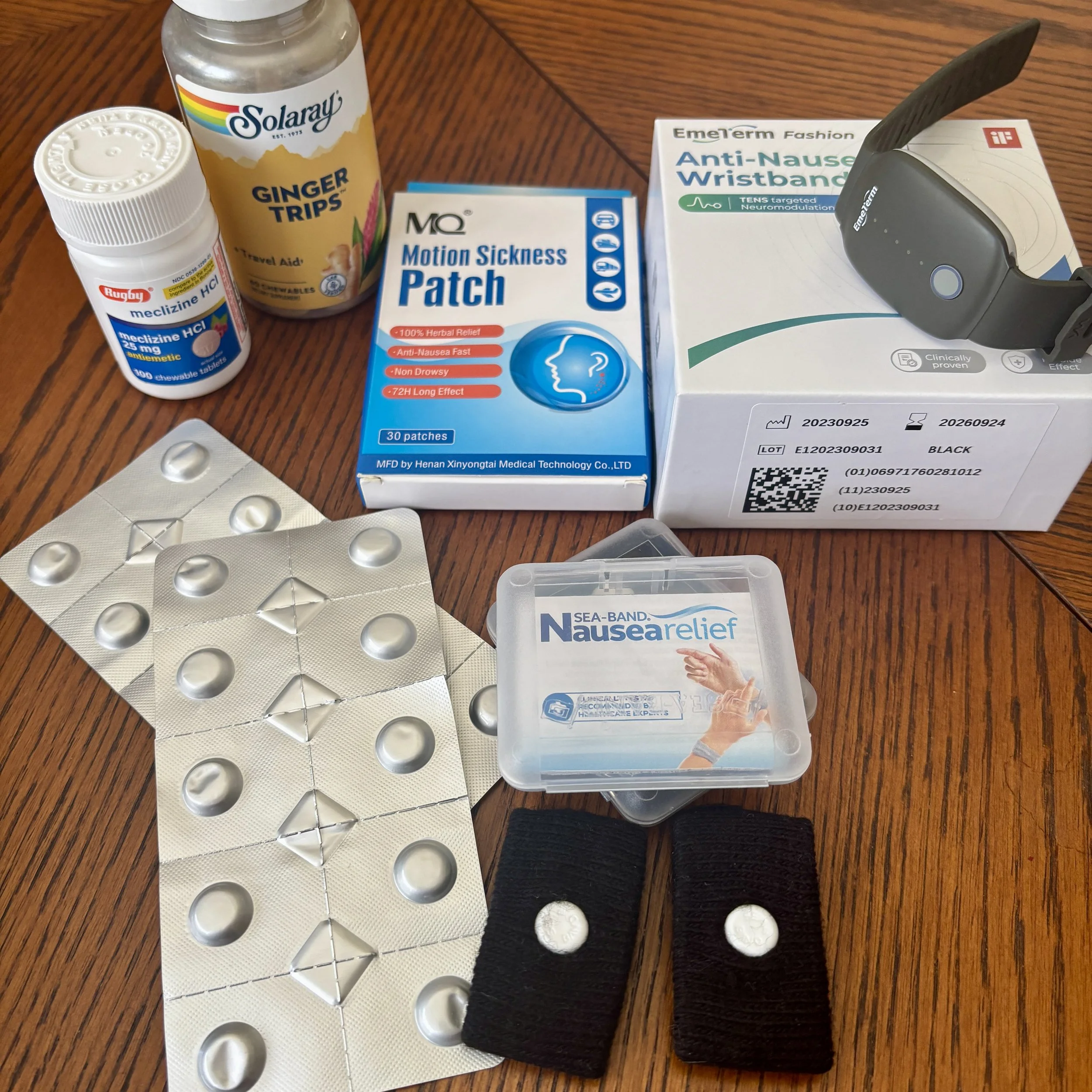
Another key to managing seasickness is traveling prepared. Share any concerns you have with your doctor. They can provide advice on prescription and over-the-counter medications that can help.
Pictured here is our travel kit for motion sickness prevention and treatment. It includes meclizine (Bonine), Zofran anti-nausea, ginger, homeopathic behind-the-ear patches, sea bands, and an anti-nausea band with electric pulses.
So far, we’ve done great with just meclizine, but we take the rest of the pack for peace of mind. Always test medications before traveling and consult your doctor with any needs or questions.
Watch What You Eat
While cruise ships are known for great dining and fun, pacing yourself - especially on the first day - can make a big difference. Avoid heavy, greasy foods and eat small, balanced meals. Skip excessive alcohol and make sure you stay hydrated. Once you get your sea legs, you’ll be able to expand your adventures, but if you start to feel a little shaky, take it easy until you feel better.
Final Thoughts
While seasickness is possible, don’t let it keep you from booking a cruise. Rev. Brian is prone to motion sickness and was nervous about our first sailing. By following the advice above, he has grown to love cruising, and we are confident you will too. It is a great way to travel!
If you do get sick, the ship’s medical center can provide treatment that will help you feel better. They will likely charge you a fee for that service, which is why we always recommend travel insurance.
If you are ready to book a cruise or if you have any questions, don’t hesitate to reach out. We are here to help!